
Can a Body Corporate Arrange or Pay for Smoke Alarm Compliance?
Published:
Modified:
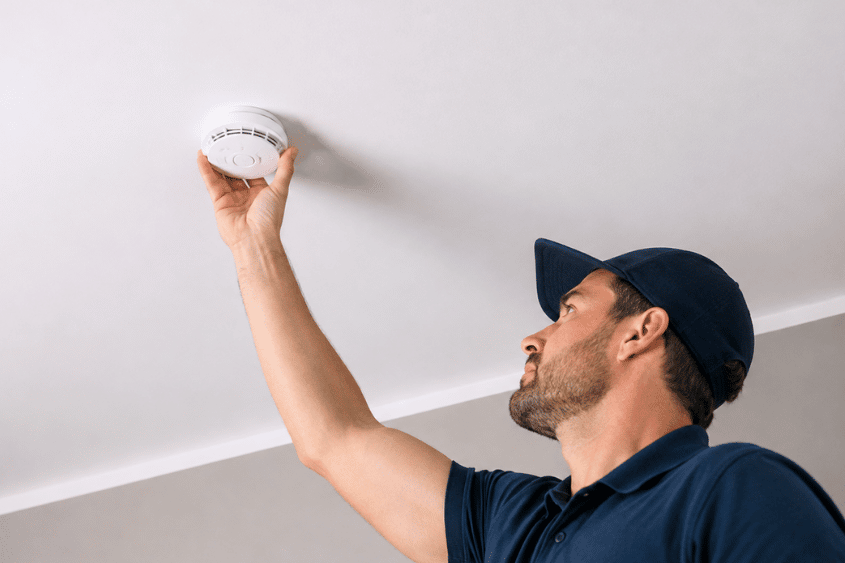
From 1 January 2027, every owner-occupied dwelling in Queensland, including individual lots in a body corporate scheme, must have smoke alarms that are photoelectric, interconnected, and either hardwired or powered by a non-removable 10-year battery, installed in specific locations within the lot.
Rental lots and lots sold since 2022 have already had to meet this standard, however 2027 is when it extends to the remaining owner-occupied lots that haven’t yet upgraded.
With this deadline fast approaching we are often asked if the body corporate can “organise smoke alarm compliance for everyone”, rather than leaving each owner to sort it out individually?
The short answer is no, not by itself. Compliance for an individual lot is generally that owner’s own responsibility, not something the body corporate can take on for everyone.
Why the body corporate can't simply fund the works
For lots where the smoke alarm is contained wholly within the lot and doesn’t connect to other lots or a central system, compliance is the individual owner’s responsibility, not the body corporates.
Because of this, the body corporate generally cannot spend body corporate funds on compliance works that only benefit some owners’ individual lots. Doing so would mean owners who’ve already upgraded, or whose lots don’t need work, subsidising those who haven’t.
A word of caution on timing
Because demand for licensed electricians and smoke alarm installers typically increases as regulatory deadlines approach, owners should act well ahead of late 2026 rather than in the final months before the deadline.
Smoke Alarms in a Body Corporate FAQs
What are Queensland's smoke alarm requirements?
Under the Fire and Emergency Services (Domestic Smoke Alarms) Amendment Act 2016 and the Building Fire Safety (Domestic Smoke Alarms) Legislation Amendment Regulation 2016, all Queensland residential dwellings, including houses, townhouses, units and apartments, must have upgraded smoke alarms. This applies whether the dwelling is owner-occupied or rented.
What makes a smoke alarm compliant?
A compliant smoke alarm must be photoelectric, interconnected with every other smoke alarm in the dwelling (so that if one activates, they all activate), and either hardwired to mains power or powered by a non-removable 10-year battery. Ionisation alarms, alarms with a removable battery, and alarms that aren't interconnected are no longer permitted. If a dwelling already has hardwired alarms, they must be replaced with hardwired alarms, not battery-only units.
What's the compliance deadline for my lot?
The requirements were phased in over three stages: from 1 January 2017 for new dwellings and dwellings undergoing substantial renovation; from 1 January 2022 for rental properties and any dwelling sold; and from 1 January 2027 for all remaining owner-occupied dwellings. If your lot hasn't already been captured by an earlier trigger, such as sale, lease, or renovation, 1 January 2027 is the date by which it must comply.
Who is responsible for smoke alarm compliance in a body corporate scheme?
For lots where the smoke alarm is contained wholly within the lot and doesn't connect to other lots or a central system, compliance is the individual owner's responsibility, not the body corporate's. This is the same as for any other fixture inside the lot.
Related content
Subscribe To Our Newsletter
More To Explore
Can a Body Corporate Arrange or Pay for Smoke Alarm Compliance?
Can a body corporate pay for smoke alarm compliance in Queensland? Learn who’s responsible before the 2027 deadline and what owners need to know.

What Is a Standard Format Plan?
What is a Standard Format Plan? A plain-English guide for body corporate owners and committees on lot boundaries and maintenance responsibility