


Building defects and the caretakers role

Building defects and the caretakers role

A personal approach
to body corporate management

Relationships are the foundation of our business, built on the understanding that every client is unique, not just at a body corporate level, but as individuals.

That’s why we take the time to listen, tailoring our management approach to suit every person, their communication style and business preferences.

Receive an obligation
free proposal

We'll need to get some details about your building. Please answer the short questionnaire below.

Please contact us here if you are seeking a proposal for a building we don’t currently manage. If you are an existing BCsystems customer please email us at info@bcsystems.com.au

This article has been reproduced with the permission of Mahoneys Lawyers and Advisors.

Building defects continue to be an issue, and source of dispute, for bodies corporate. In an attempt to address this increasing issue, new body corporate regulations (which came into effect on 1st March 2021) now place greater obligations on builders, developers and bodies corporate to make sure building defects are identified and rectified on a timely basis.

What is a building defect?

There are a number of commonly used definitions, but a building defect is generally accepted to be “work that is faulty or below a reasonable standard of quality”.

What is the body corporate’s legal position?

Irrespective of who caused the building defect, or if the body corporate has any rights to hold another party responsible, the body corporate has statutory obligations in the Body Corporate and Community Management Act 1997 (Qld) (BCCMA) to maintain common property in good condition.

Accordingly, the body corporate is obliged to take action to ensure any common property that has a building defect is repaired. This could extend to:

  • repairing the building defect at the body corporate’s own cost; or
  • commencing proceedings against the entity who caused the building defect.

The appropriate approach will be determined by a consideration of the cost of repairs, urgency of the repairs and progress being made with the entity who caused the building defect.

What is the resident manager/caretaker’s role?

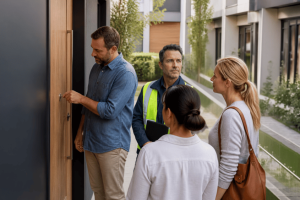
Whilst you (as caretaker/resident manager) will not be responsible for building defects in the scheme, you do play an important role in assisting the body corporate in identifying defects and managing the defect process.

A prudent resident manager / caretaking service contractor should:

  • report building defects as they become aware of them;
  • be aware of any building defects on site and the action the body corporate is taking;
  • liaise with building inspectors, the QBCC and other contractors to conduct site inspections; and
  • keep the committee informed of any change to the condition of the defects and any works being carried out.

Importantly, this role does not extend to project managing the repairs. Such a task is not something that a committee should expect a caretaking service contractor to perform as it is not within a caretaking service contractor’s expertise or duties in the caretaking agreement and requires a project manager’s licence under the QBCC Act.

Depending on the level of involvement the committee expects from the caretaking service contractor and the terms of the caretaking agreement the caretaker can be engaged to carry out a more involved process for an additional fee. However, this will not always be the case.

If your scheme is facing issues with the building defects or you have been asked to help manage the process, please do not hesitate to contact Mahoneys to discuss the factual circumstances of your body corporate.

This article was written by  Amy ODonnell from Mahoneys Lawyers and Advisors.

Related content

Share This Post

Subscribe To Our Newsletter

Is BCsystems your current body corporate manager?
You are

More To Explore

What is a body corporate
Basics

What is a body corporate?

What is a body corporate? Learn how a community titles scheme works, what the body corporate does, and how shared property is managed in Queensland.

Community Gardens
Other

Community Gardens in Body Corporate Schemes

Community gardens are more than just green spaces – they’re vibrant hubs where people connect, learn, and create shared value. While they are often found in public parks, schools, and neighbourhood spaces, the same concept can be brought into body corporate communities.