

Home » Maintenance » Fencing Repairs in a Body Corporate
A personal approach
to body corporate management
That’s why we take the time to listen, tailoring our management approach to suit every person, their communication style and business preferences.
Receive an obligation
free proposal
Please contact us here if you are seeking a proposal for a building we don’t currently manage. If you are an existing BCsystems customer please email us at info@bcsystems.com.au
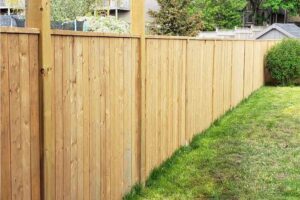
Fencing issues are a frequent source of confusion in body corporate schemes. While fence maintenance may appear simple, determining who is responsible for their maintenance, repair or replacement can be anything but. The answer depends on where the fence is located, who it separates, and which legislative framework applies, making cost sharing far less straightforward than many owners expect.
In a body corporate, fencing issues are governed by a combination of the Body Corporate and Community Management Act 1997, the scheme’s by-laws, and in some cases the Neighbourhood Disputes (Dividing Fences and Trees) Act 2011.
Types of Fences in a Body Corporate
Before determining who pays for a fence, it is essential to identify what type of fence it is and where it is located. In broad terms, fences in a body corporate usually fall into one of the following categories:
- fences between two individual lots
- fences between a lot and common property
- fences within an exclusive use area
- perimeter or boundary fences separating the scheme from neighbouring land
- fences between two areas of common property
Each of these is treated differently under the legislation.
Fences Between Two Lots
Where a fence separates two individual lots within the scheme, responsibility is generally shared between the two lot owners. This includes the cost of repair, maintenance, and replacement, unless the by-laws or an agreement between the owners state otherwise.
The body corporate is not normally responsible for these fences, even though they may visually form part of the overall development.
Fences Between a Lot and Common Property
If a fence separates a lot from common property, responsibility is usually shared equally between the body corporate and the lot owner. This applies regardless of whether the fence benefits one party more than the other.
In practice, these fences often cause confusion, particularly where they form part of courtyards, gardens or internal boundaries within townhouse-style developments.
Exclusive Use Fences
Exclusive use areas remain common property, even though they are allocated for the exclusive use of a particular lot. Fences within or surrounding these areas require close reference to the exclusive use by-law as some transfer maintenance responsibility for fencing to the benefiting lot owner.
Boundary and Perimeter Fences
Perimeter or boundary fences are those that sit along the external boundary of the scheme, separating the body corporate from neighbouring land. Neighbours may include private residences, commercial properties, other bodies corporate, council land, parks or nature reserves.
In Queensland, the body corporate is considered the ‘owner’ of the scheme land for the purposes of the Neighbourhood Disputes (Dividing Fences and Trees) Act 2011. This means boundary fence responsibilities are generally shared between the body corporate and the adjoining landowner.
Lot owners are generally not responsible for these fences, even if the fence runs behind or alongside their lot.
How Fence Costs Are Shared
Unless otherwise agreed, the cost of repairing, maintaining or replacing a fence is usually shared between the responsible parties.
For dividing fences, the legislation is based on the concept of a ‘sufficient dividing fence.’
This means each party must contribute to a fence that is appropriate having regard to:
- the standard of the existing fence
- the purpose of the fence
- the type of fencing common in the area
- how the land on each side is used
- reasonable privacy and security expectations
This usually results in a like-for-like replacement. If one party wants an upgrade, such as higher fencing or different materials, they are typically required to pay the additional cost unless all parties agree.
Related content

Share This Post
Subscribe To Our Newsletter
More To Explore

Fencing Repairs in a Body Corporate
While fences may appear simple, determining who is responsible for their maintenance, repair or replacement can be anything but. The answer depends on where the fence is located, who it separates, and which legislative framework applies.

Committee Meetings: Practical and Legal Requirements
One of the key elements of a well-functioning body corporate is the effective management of committee meetings. These meetings are where decisions are made, issues are addressed, and plans are put in place to ensure the smooth operation of the scheme.