
Abandoned Vehicles in a Body Corporate: What Can You Do?
Published:
Modified:
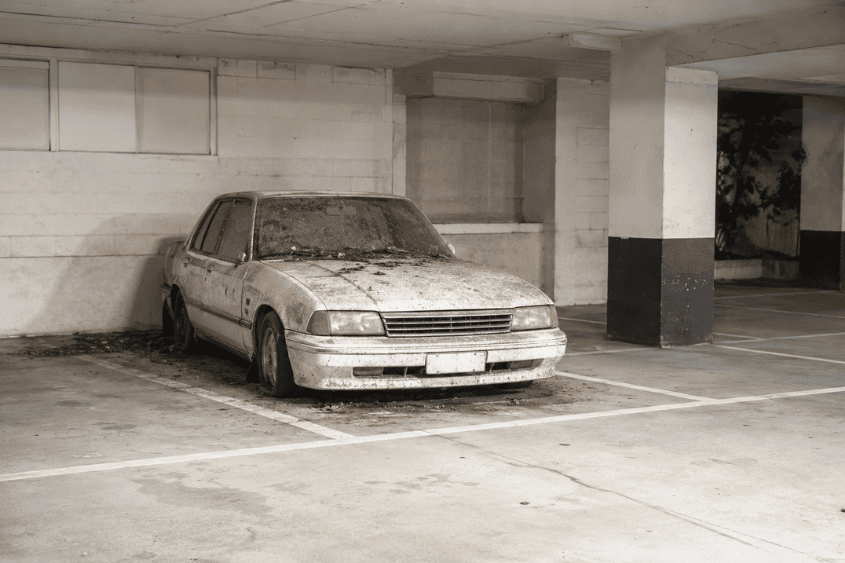
Whether it’s a car left in visitor parking for months, a derelict vehicle occupying common property, or a vehicle blocking access to garages or emergency routes, committees are often left wondering what authority they have to deal with the situation and what steps they can legally take.
The difficulty is that abandoned vehicles do not fit neatly into a single area of legislation. Depending on the circumstances, a matter may involve parking by-laws, transport laws, local government regulations, or even police involvement.
Adding to the complexity, significant legislative changes took effect in Queensland on 1 May 2024, providing greater clarity around when vehicles can be towed from common property.
So, what should a body corporate do when a vehicle appears to have been abandoned?
Is the Vehicle Actually Abandoned?
Before taking any action, it’s important to determine whether the vehicle is genuinely abandoned.
A vehicle that has been left in the same location for an extended period is not automatically abandoned.
- A resident may own a vehicle that is rarely used.
- An owner may be travelling for an extended period.
- A visitor may be parked in breach of a by-law but still intends to return.
The distinction matters because an abandoned vehicle and a parking by-law breach may require different responses.
Questions a committee should consider include:
- How long has the vehicle been there?
- Is the vehicle registered?
- Does it appear damaged, derelict, or unroadworthy?
- Has anyone claimed ownership?
- Is it parked in a location where it is permitted to be?
A vehicle occupying visitor parking for weeks may simply be a by-law compliance issue, whereas an unregistered vehicle covered in dust and left on common property for months may indicate abandonment.
The Legislative Gap
Many committees are surprised to learn that the Body Corporate and Community Management Act 1997 (Qld) does not contain a specific process for dealing with abandoned vehicles.
Instead, bodies corporate often need to navigate several different legal frameworks depending on the circumstances.
- Parking by-laws may regulate where vehicles can be parked.
- Transport legislation may apply where a vehicle is obstructing access or creating a safety issue.
- Local councils may have powers relating to abandoned or derelict vehicles.
- Queensland Police may need to be involved if a vehicle is suspected to be stolen.
Because there is no single abandoned vehicle procedure within body corporate legislation, committees should carefully assess each situation before taking action.
What Changed in 2024?
When it comes to dealing with vehicles on common property, the most important recent development for Queensland bodies corporate came into effect on 1 May 2024.
Amendments to the Body Corporate and Community Management Act 1997 (BCCMA) clarified and expanded the circumstances in which a body corporate may arrange for a vehicle to be towed from common property. Previously, towing an owner or occupier’s vehicle required following the full by-law enforcement process – issuing contravention notices, then seeking orders from the Commissioner’s Office or Magistrates Court, a process that could take many months. Under the updated BCCMA, a body corporate is no longer required to follow that dispute resolution process before towing a vehicle that is unlawfully parked on common property.
This change was designed to provide practical solutions for situations where vehicles are preventing access to garages, blocking driveways, interfering with emergency access, or otherwise creating operational or safety issues.
However, the amendments do not create a blanket right to tow every vehicle that has been left on common property. Each situation must still be assessed on its own facts, and committees should ensure they understand the legal requirements before arranging a tow.
What Should the Committee Do with an Abandoned Vehicle?
When a vehicle appears to have been abandoned, a measured and documented approach is usually the safest option.
1. Try to Identify the Owner
The first step should be determining who owns or controls the vehicle.
- Contact nearby lot owners or occupiers.
- Review any available parking records.
- Ask building management or onsite caretakers.
- Investigate whether registration details can assist in identifying the owner.
Often, the issue can be resolved quickly once contact is established.
2. Communicate in Writing
If the owner can be identified, written communication should be issued.
- Explain the concern.
- Identify any applicable by-law or issue.
- Request that the vehicle be moved within a reasonable timeframe.
- Explain potential consequences if the matter is not addressed.
Maintaining clear records of all communication is important.
3. Consider Whether Other Authorities Should Be Involved
If the vehicle appears abandoned, unregistered, or derelict, the committee may need to contact the relevant local authority for guidance.
In some circumstances, local councils have powers relating to abandoned vehicles.
If there is any suspicion that the vehicle may be stolen, Queensland Police should be contacted immediately.
4. Consider Towing as a Last Resort
Towing may be appropriate in some circumstances, particularly where the vehicle:
- Is obstructing access.
- Creates a safety risk.
- Prevents use of common property.
- Falls within the circumstances contemplated by the 2024 legislative amendments.
Before proceeding, committees should ensure they have properly documented the issue, attempted reasonable communication where possible, and obtained appropriate advice if uncertainty remains.
The Importance of Acting Reasonably
One of the most important obligations imposed on a body corporate is the requirement to act reasonably.
Under the Body Corporate and Community Management Act, both the body corporate and its committee must make reasonable decisions when carrying out their functions.
This means that even where a committee has the power to take action, the manner in which that power is exercised matters. Relevant factors include:
- The seriousness of the issue.
- The impact on other residents.
- Whether attempts were made to identify the owner.
- Whether reasonable notice was provided.
- Whether a less drastic solution was available.
A decision to tow a vehicle without appropriate investigation or notice may expose the body corporate to disputes or claims for costs if the action is later found to be unreasonable.
Do By-Laws and Signage Matter?
Yes. Parking by-laws form the foundation of a body corporate’s ability to manage vehicle-related issues on common property.
Owners and occupiers are expected to be aware of the scheme’s by-laws, however signage remains a valuable management tool.
Clear signs can:
- Reinforce parking restrictions.
- Inform visitors of the rules.
- Support compliance efforts.
- Reduce arguments that guests were unaware of parking requirements.
Where visitor parking or restricted parking areas exist, appropriate signage is generally considered best practice and required before a towing company will remove a vehicle.
Related content


Subscribe To Our Newsletter
More To Explore

Who can approve significant body corporate spending?
Who can approve significant body corporate spending? Learn how the committee spending limit works, when owners must vote and when two quotes are needed.

What Does ‘Acting Reasonably’ Mean for a Body Corporate Committee?
“Act reasonably” is a phrase that appears throughout body corporate law. It’s a legal standard that applies to almost every decision a committee makes – enforcing by-laws, approving or refusing applications, spending scheme funds, engaging contractors, and resolving disputes between owners.