

When to Bring in Expert Advice: A Guide for Body Corporate Committees
Published:
Modified:
Body corporate committees are elected to make decisions on behalf of their community. Decisions can involve specialist building matters, legal obligations, legislation and complex finance and insurance matters – areas most volunteer committee members have never trained for.
Recognising when a decision calls for expert advice is part of making sound, well-informed decisions on behalf of the community.
Why expert advice matters
Obtaining professional advice, when the situation calls for it, can:
- provide confidence that decisions are based on accurate information
- reduce the risk of costly mistakes
- help demonstrate that the committee has acted reasonably, consistent with its obligations, if a decision is later questioned
- support compliance with legislative obligations under the BCCM Act and the applicable regulation module
- provide owners with greater confidence in the committee’s decision-making.
In many cases, the cost of obtaining advice is small compared to the potential cost of getting an important decision wrong.
Situations where expert advice is worth considering
Major building repairs
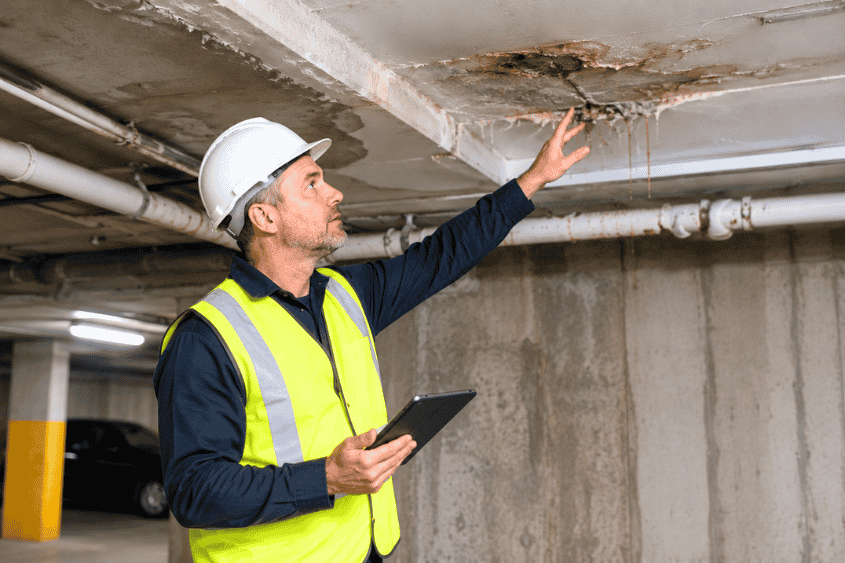
When dealing with significant building issues like concrete cancer, a roof replacement, water ingress or structural defects, an engineer, building consultant or other qualified professional can help identify the cause of the problem and recommend the most appropriate solution.
Rather than relying solely on competing contractor opinions, committees can use independent expert advice to compare quotes and understand exactly what work is required.
Sinking fund forecast
A sinking fund forecast is a projection of anticipated major expenditure on common property, used to determine the levies needed to fund future capital works. It is typically renewed every 5 years and covers a minimum 10-year period.
While the body corporate is not required by legislation to engage a professional to prepare the forecast, a quantity surveyor is commonly used to provide an independent, detailed assessment of future maintenance requirements and replacement costs, helping the body corporate budget appropriately and avoid unexpected special levies.
Complex legal or by-law issues
Not every disagreement requires legal advice, but where legislation is unclear, by-laws are disputed, or the body corporate is involved in a significant dispute, advice from a solicitor experienced in body corporate law can help committees understand their obligations before making a decision.
Obtaining advice early may also help prevent a dispute from escalating to adjudication.
Insurance valuations
The applicable regulation module sets out minimum insurance requirements for the body corporate, including common property and public risk cover, and requires an independent valuation of insured buildings at least every 5 years to ensure they remain insured for full replacement value. Because construction costs and material prices can shift significantly between valuations, this periodic reassessment helps avoid the risk of being underinsured in the event of a claim.
Insurance brokers can explain policy options, valuation requirements and claims processes, while legal advice may be appropriate if complex coverage issues arise.
Safety and compliance
Electrical safety, fire compliance, asbestos, workplace health and safety obligations, pool safety and accessibility requirements often require specialist knowledge.
Engaging appropriately qualified professionals helps ensure the body corporate understands its obligations and manages risks effectively.
Independent advice versus contractor recommendations
Contractors provide valuable technical knowledge, but it’s important to remember they are generally providing advice in relation to the work they are quoting.
For significant projects, obtaining an independent assessment before seeking quotations can help ensure the committee is comparing like-for-like proposals and selecting the solution that best meets the building’s needs. This can be particularly valuable where costs differ substantially or contractors recommend different approaches.
For larger projects, engaging a project manager to oversee the process can also be a time and cost-effective approach, providing independent coordination across contractors, trades and other consultants from planning through to completion.
Asking questions is part of good governance
Committees sometimes worry that seeking advice will make them appear inexperienced.
Most committees consist of volunteers with a wide range of professional backgrounds, and no individual member is expected to have expertise in construction, legislation, accounting, engineering and insurance at once. Obtaining advice where needed is consistent with the committee’s obligation to act reasonably under Schedule 1A of the BCCM Act.
Your body corporate manager can help
While, a body corporate manager cannot provide specific legal, engineering or financial advice, they can offer general information and guidance on how legislation applies to your building based on their experience managing similar schemes.
Body corporate managers can also often help identify when specialist advice may be appropriate and put the committee in touch with suitably qualified professionals.
The committee remains responsible for making the final decision, but having the right information available, along with access to the right expertise, supports the decision-making process.
Related content
Subscribe To Our Newsletter
More To Explore

When to Bring in Expert Advice: A Guide for Body Corporate Committees
Recognising when a decision calls for expert advice is part of making sound, well-informed decisions on behalf of the community.

Body Corporate Conflict of Interest: What Committees Must Do After Disclosure
When a conflict of interest occurs, the committee member is required to disclose the interest before any vote is taken. But disclosure is only the first step. Once a conflict has been declared, the committee must also manage it correctly.