

Before you cut down the trees. Why irreversible decisions deserve extra care.

Home / Case Study / Before you cut down the trees. Why irreversible decisions deserve extra care.

Some decisions can be undone if they turn out to be wrong. Others, like removing a mature tree, simply cannot be. A recent decision is a thoughtful example of why body corporates should slow down and see the whole picture before taking a step that can never be reversed.

The Case

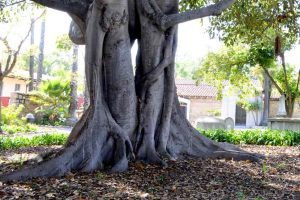
In Villa’s Regency [2026] QBCCMCmr 307 (click here to read decision), a boundary wall running along the edge of a small scheme had been slowly deteriorating for some time, with an engineer’s report identifying several contributing causes, including drainage problems, cracking, and even the weight of a roof structure built onto part of the wall. The committee’s proposed fix was to remove three mature trees and a clump of palms growing near the wall, on the basis that root growth was contributing to the damage. Owners had already voted down a very similar motion once before, and the committee brought essentially the same proposal back to a second meeting, this time supported by a fresh arborist’s report recommending the trees be removed to reduce structural loading on the wall.

A concerned lot owner, who did not oppose fixing the wall itself, objected to approving tree removal in isolation, without first working out the complete plan for fixing the wall as a whole. He sought an interim order pausing implementation of the tree removal motion, even if it passed at the upcoming meeting, until the wider dispute could be properly resolved.

The Decision

The adjudicator agreed there was a genuine question worth pausing over. Tree removal is, for all practical purposes, irreversible: once mature trees are gone, they cannot simply be put back if it later turns out removing them was not the right call, or was not actually the main problem. Yet the evidence available did not show that the trees were the primary cause of the wall’s poor condition, nor that removing them alone would meaningfully fix it. The wall had multiple contributing problems, most of which had nothing to do with the trees at all.

The adjudicator’s key insight was that the genuine urgency in this situation related to the wall’s structural condition, not to the trees themselves. Pausing the tree removal did not stop the body corporate from getting on with addressing the wall through other means in the meantime, whether temporary safety measures or a properly worked-out rectification plan. Weighing an irreversible action against a reversible delay, the balance came down clearly in favour of holding off until a genuinely complete solution had been worked out.

What You Can Do

When a proposed motion involves an irreversible step, such as removing mature trees, demolishing a structure, or making a permanent change to common property, it is worth asking a simple question before voting: is this actually part of a complete, considered solution, or is it just the easiest piece to tackle first? If expert reports identify several contributing causes to a problem, addressing only one of them, particularly an irreversible one, without a plan for the rest, is worth pausing on.

For owners raising a concern like this, it helps enormously to frame the objection constructively, as this applicant did: not opposing the underlying need to fix the problem, simply asking for the complete picture before an irreversible step is taken.

How BCsystems Can Help

Where a scheme is facing a complex maintenance issue with multiple contributing causes, working with the right experts to develop a genuinely complete plan, before committing to any irreversible step, saves both money and regret down the track. BCsystems can help coordinate that kind of thorough, well-sequenced approach.

Conclusion

Patience is not always the easy path, but for decisions that cannot be undone, it is usually the wise one. Getting the complete picture before acting protects both the scheme’s assets and everyone’s peace of mind.

Related content

Trees, Roots, and Responsibility: Managing Large Plants in Body Corporate Grounds

Trees, Roots, and Responsibility: Managing Large Plants in Body Corporate Grounds

Large plants and their roots can add shade and amenity, but they also bring risk - damage to pipes, stormwater…

Subscribe To Our Newsletter

Is BCsystems your current body corporate manager?
You are

More To Explore

Acting reasonably
Committee advice

What Does ‘Acting Reasonably’ Mean for a Body Corporate Committee?

“Act reasonably” is a phrase that appears throughout body corporate law. It’s a legal standard that applies to almost every decision a committee makes – enforcing by-laws, approving or refusing applications, spending scheme funds, engaging contractors, and resolving disputes between owners.

Contravention Notices
By-laws

How to Issue a By-Law Contravention Notice

A contravention notice is the formal step a body corporate takes before it can pursue further enforcement action against an owner or occupier over an alleged by-law breach. Under the Body Corporate and Community Management Act 1997 (Qld), it’s a legal prerequisite, not a warning letter, and the requirements around what it must contain and who it must be given to are specific.