





renovations, repairs & maintenance
Living in a body corporate community means not all works to a property are treated the same way. Whether you are replacing a broken fitting, upgrading your bathroom, or arranging regular servicing, it’s important to understand whether the work is considered a repair, renovation, or maintenance task. Each category has different rules around approval, responsibility, and cost.
A key part of this process is knowing the boundaries between your lot and the body corporate’s common property.
These boundaries are shown on your scheme’s survey plan, which helps determine whether the body corporate or the lot owner is responsible for particular works. Insurance obligations and by-laws also play a role, further shaping what approvals are required and who must arrange or pay for the work.
This guide sets out the distinctions between repairs, renovations, and maintenance, and explains how each is managed within a body corporate scheme. By understanding these differences, owners can ensure they remain compliant, avoid unnecessary disputes, and protect both their property and the wider community.
renovations
Renovations go beyond simply fixing or maintaining. They involve changing, upgrading, or improving part of a lot or the building. Because renovations can impact the property’s structure, appearance, or shared services, they are often subject to stricter requirements than basic repairs or maintenance.
In a body corporate setting, renovations usually require formal approval before works can begin. The level of approval needed depends on the type of renovation, its potential impact on common property, and the scheme’s by-laws.
Understanding the distinction between what you can do within your lot and where body corporate approval is needed is essential. Owners should always review their by-laws, survey plan, and seek written consent where required to ensure renovations are compliant.
roofs
In a body corporate, determining who is responsible for maintaining and repairing the roof depends on how the property is registered and what areas are defined as common property.
In most apartment buildings and schemes registered under a building format plan, the roof is common property and maintained by the body corporate. In townhouse or duplex developments registered under a standard format plan, the responsibility often rests with the individual lot owners.
Roofs and Gutters in a Body Corporate Community
Who is responsible for maintenance in a body corporate
minimum housing standards
Ensuring the safety, security, and functionality of all rental properties in Queensland is the goal of minimum housing standards, which came into effect on September 1, 2023. Any new lease signed or renewed after this date must adhere to these standards. For existing tenancies, the minimum housing standards will be enforced from September 1, 2024.
These standards are applicable across various types of rental agreements, including general tenancies, moveable dwellings, and rooming accommodation agreements.
What are minimum housing standards?
Minimum housing standards encompass several criteria, including:
- Ensuring the property is weatherproof and structurally sound.
- Maintaining good repair, including fixtures and fittings that do not pose injury risks during normal use.
- Installing functioning locks or latches on all accessible external doors and windows.
- Keeping the property free from vermin, damp, and mould, excluding instances caused by tenants.
- Providing curtains or other window coverings for privacy, especially in areas like bedrooms.
- Ensuring adequate plumbing and drainage, with access to suitable drinking water.
- Providing privacy in bathroom areas and ensuring flushable toilets connected to proper waste disposal systems.
- Having a functional cook-top if a kitchen is provided.
- Including necessary fixtures for a functional laundry if laundry facilities are provided, though white goods may be supplied by tenants.
Who is responsible for the upkeep of minimum housing standards?
Responsibilities regarding minimum housing standards fall on the owner or property manager, who must ensure compliance at the beginning of the tenancy.
If maintenance issues arise during the tenancy, making the property non-compliant, tenants must promptly inform the owner or property manager, or the designated emergency repair contact listed in the tenancy agreement. It is then the responsibility of the owner or property manager to ensure timely repairs. If the repair means the property no longer meets minimum housing standards, then the repair is classified as an emergency.
What if the property doesn’t meet minimum housing standards?
Tenants have various options if they believe their rental property does not meet minimum housing standards, whether upon moving in or during the tenancy. Different options apply to rooming accommodation and general tenancies, and tenants are encouraged to refer to the Residential Tenancies Authority (RTA) for guidance.
What if the property is part of a body corporate
In instances where a rental property is part of a body corporate, compliance with both minimum housing standards and body corporate by-laws is necessary. There may be cases where repairs to meet minimum housing standards become the responsibility of the body corporate.
See our article Who is Responsible for Maintenance in a Body Corporate.
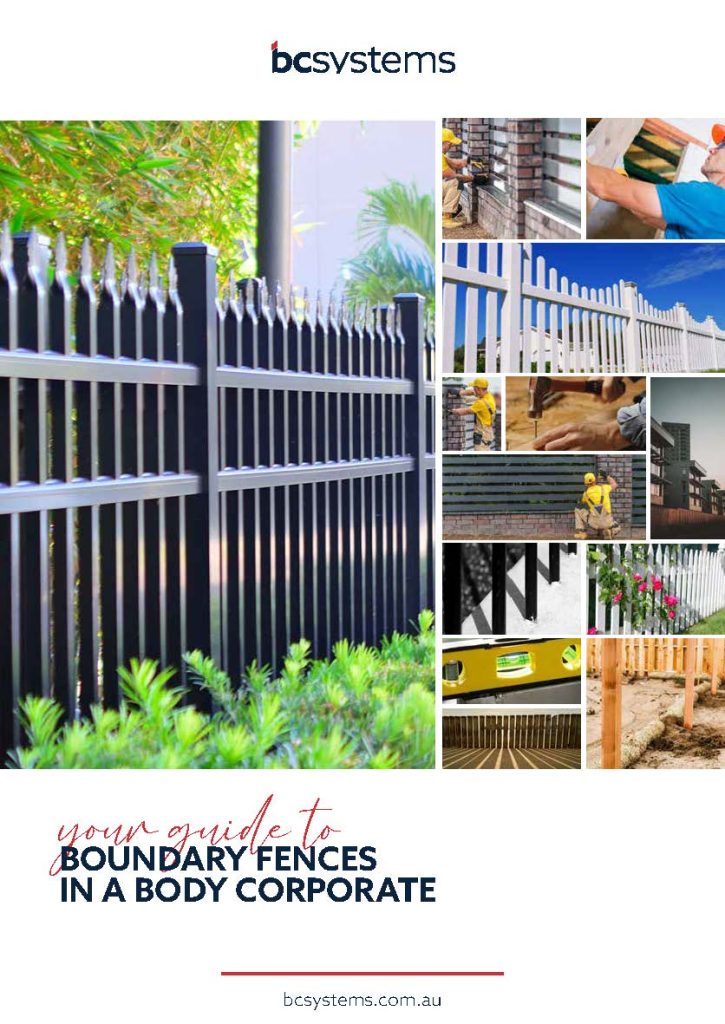
Fences & Retaining walls
Most community management schemes share at least one boundary fence with a neighbouring property – which could be another body corporate, a private residence, a commercial site, or public land such as a park or road reserve.
For the purposes of determining repair and maintenance responsibility, we start by distinguishing between exterior perimeter fences, which surround the body corporate property and are generally the responsibility of the body corporate, and internal fences, which sit between individual lots or between a lot and the common property.
Retaining walls are a separate consideration. Unlike fences, which simply divide land, retaining walls are structural elements built to hold or support soil at different levels. Because of their function, construction and cost, the process for determining responsibility is different and usually more complex than fencing.
For more detailed legislative information, refer to the Neighbourhood Disputes (Dividing Fences and Trees) Act 2011 and the Body Corporate and Community Management Act 1997 on the Queensland Government website.
Retaining walls in body corporate developments
Dividing fences
when an owner fails to perform maintenance
In body corporate scheme similar maintenance obligations exist for both owners and the body corporate.
Maintaining your lot in ‘good condition’ is not optional. Under the body corporate law lot owners must maintain their lot, and if they have exclusive use of common property, the exclusive use by-laws may assign responsibility for this area as well.
This article explores the consequences and processes in place when an owner in a body corporate fails to perform the required maintenance to their lot.
What does ‘good condition’ mean?
An owner typically is responsible for maintaining their individual lot in ‘good condition’ including replacing utility infrastructure when needed. This is the standard set by the Body Corporate and Community Management Act 1997.
The legislation also requires that owners keep all parts of their lots visible from another lot or the common property, ‘clean and tidy condition’.
The interpretation of ‘good condition’ depends on the individual case.
For a 30-year-old car to be in good condition today, it should have been regularly serviced with oil changes and new tyres, regularly cleaned with parts replaced as they break. For a car, ‘good condition’ is a higher standard than simply being roadworthy. ‘Good condition’ requires all its key features to work, including the radio and air-conditioning. It does not need to look in showroom condition, and it can have fair wear and tear.
What parts of the lot does ‘good condition’ apply to?
The ‘good condition’ law applies to all parts of a lot, even if the issue is not directly affecting other lots or the common property.
In practice, the body corporate often finds out about lot maintenance issues when they start to affect others
Some common examples of lot owner responsibilities include:
- Electrical wiring, lights and switches, power points
- Electrical RCD – safety switch
- Built-in appliances – oven, cooktop, rangehood
- Ceiling fans, bathroom or laundry exhaust fans
- Plumbing – basins, showers, toilets, water meters, shut-off valves
- Smoke-alarms
- Balcony tiles and grout
- Internal painting
- In a standard format plan lot – exterior walls, doors and windows, railings, roof, gutters
- Gardens within exclusive-use courtyards, unless the exclusive use by-law requires the body corporate maintain the specific area.
Does the lack of maintenance need to impact others?
No. It is not relevant whether the issue of a poorly maintained lot impacts others or not.
If a toilet in the lot stops flushing, the lot owner must repair it, even if that toilet is in a guest bathroom and not regularly used. The lot owner cannot choose to leave the toilet in a non-functioning state.
As all owners jointly own the development, all owners are affected directly or indirectly if one or more lots are not in good condition. These impacts may be obvious, or they may be in the form of reduced property values, increased administrative cost or increased insurance costs.
What happens when an owner fails to perform required maintenance?
If a lot owner fails to maintain their lot in ‘good condition’, the body corporate may step in and carry out the maintenance on behalf of the lot owner.
The body corporate may then recover the reasonable cost of carrying out the work from the owner of the lot as a debt.
Example 1 – Leaking shower
Lot 5 has a large area of water damage on their apartment ceiling. The bathroom of lot 10 is directly above the stain area.
The body corporate committee brings this potential leak to the attention of the owner of lot 10. Bathroom and shower waterproofing is the obligation of the lot owner to maintain. The fact that water is leaking into the unit below indicates that some part of that system in lot 10 is not in ‘good condition’.
The body corporate writes to the lot 10 owner to ask them to satisfy their obligation to engage the necessary experts to bring lot 10 bathroom into ‘good condition’, identifying and fixing the leak within a reasonable time.
The owner of lot 10 will also be liable to repair any damage to lot 5 which is caused by the leak in lot 10, which increases the urgency of the situation.
If the owner of lot 10 does not respond, or if they fail or refuse to carry out the work, the body corporate may:
- Issue an entry notice to the owner of lot 10
- Gain access to lot 10 – including by locksmith if access is not provided by the owner
- Have a plumber inspect lot 10 to determine the source of the leak
- Make repairs which may range from a simple plumbing fix, to removal and reinstallation of the shower waterproofing, tiling and shower screen in lot 10 bathroom
- Charge the cost of all of the work to the owner of lot 10.
Example 2 – Smoke detectors not working
Townhouse 1 is structurally independent from the other townhouses and was constructed with interconnected smoke-alarms to meet fire regulations.
Townhouse 1 owner carries out internal painting and removes the smoke alarms and reinstalls them in a different location which now does not comply with the fire regulation.
Even though this is not causing damage to townhouse 1, other townhouses, or common property, the smoke-alarm system is no longer in ‘good condition’.
The interpretation of ‘good condition” needs to take into account the purpose and function of the thing. For a smoke alarm system to be in “good condition” it must provide the interconnecting smoke and fire warning function for which it was installed.
The lot owner is required to reinstall the smoke-alarm system to meet the fire regulations. If they fail to do so, the body corporate may enter their lot and carry out the work and charge that cost to the owner.
Legal liability
Owners may face other legal liability, aside from the cost of the body corporate correcting the issue, for failing to keep their lot in ‘good condition’.
In a scenario where a relatively minor water leak causes a significant concealed black mould problem for a lot which shares a common wall, the instigating lot may be liable for:
- Repairing damage to the affected lot – wall repair, mould treatment, decontamination
- Relocation and temporary accommodation costs for the residents of the affected lot
- Costs for damaged property and furniture of the affected lot
- Loss of rent to the affected lot owner while the work is carried out
- Medical expenses of the affected lot if illness or injury is caused by the mould
Even in cases where an insurance policy may respond, if an owner has failed to maintain their lot in ‘good condition’, the insurance company may seek to recover costs from that owner.
Protecting the integrity of the scheme
By carrying out maintenance that an owner fails to perform, the body corporate ensures that the overall integrity of the building and common areas is preserved.
This maintenance obligation and enforcement is a critical tool in managing risks to both property and residents, ensuring the safety and functionality of the community as a whole.
REPAIRS
Repairs are works carried out to restore something that is broken, damaged, or not functioning correctly. In a body corporate setting, repairs can range from minor fixes within an individual lot, such as repairing a leaking tap or a broken window, to more significant works affecting common property, like replacing a damaged roof tile, fixing a faulty lift, or repairing gutters.
Responsibility for repairs is determined by where the issue occurs. Generally, the body corporate is responsible for maintaining and repairing common property, which includes shared areas, structural elements, and facilities used by all owners. Individual lot owners are responsible for repairs within their own lots, including fixtures, fittings, and internal surfaces.
Renovations, Repairs, or Maintenance in a Body Corporate
Building defects and the caretakers role
Who is responsible for subsidence?
gutters
Roof gutters require regular maintenance and cleaning, typically at least once per year, though frequency may vary depending on factors such as nearby trees or a history of leaking gutters.
Responsibility for gutter maintenance depends on the type of strata plan. In building format plans, the body corporate owns and maintains the roof and gutters. In standard format plans, lot owners maintain gutters that service only their lot, while shared gutters are maintained by the body corporate. Reporting any issues to the committee or building manager ensures timely attention and proper upkeep.
Understanding Australian Roofing lingo
Gutter maintenance
gardens & trees
The responsibility for maintaining gardens and trees in a body corporate depends on whether the area is common property, exclusive use, or within an individual lot. Common property is generally maintained by the body corporate.
Where an area of common property is allocated as exclusive use to a lot, such as a private courtyard, the maintenance responsibility usually shifts to the lot owner, unless the by-laws specify otherwise.
In these cases, the lot owner is considered the ‘tree keeper’ under the Neighbourhood Disputes (Dividing Fences and Trees) Act 2011, responsible for maintaining the tree and liable for any damage it causes. This applies even to large or council-protected trees, again, unless by-laws clearly assign responsibility differently.
Trees, Roots, and Responsibility: Managing Large Plants in Body Corporate Grounds
What You Can and Can’t Do in Your Exclusive-Use Courtyard
Landscaping in a body corporate
pest inspections
Generally, the body corporate is generally responsible for pest inspection, prevention, and treatment on common property, which includes shared spaces such as gardens, hallways, and recreational areas. Lot owners are responsible for inspections and treatment within their own lots, including interior spaces, balconies, patios, or any other areas that form part of their property.
Lot owners however, should check their by-laws, which may outline specific obligations, procedures for inspections, and cost allocations.
Who is responsible for pest control in a body corporate?
Termites in strata
approvals
Before you pick up a hammer or call a contractor, it’s important to understand that most renovations in a body corporate scheme require some form of approval.
This isn’t just red tape. It’s about protecting the building, common property, and your neighbours.
The body corporate has a legal responsibility to oversee changes that could affect the structure, safety, appearance, or amenity of the property. Knowing when and how to seek approval will save you time, avoid disputes, and ensure your project is compliant from the start.
Renovation Approvals in a Body Corporate
When Do I Need to Get Approval from the Body Corporate?
Renovating a lot in a body corporate
Making internal changes to your unit
INTERNAL CHANGES
Lot owners generally have more freedom to make changes inside their own unit or townhouse than they do on the outside. However, this freedom isn’t absolute. The Body Corporate and Community Management Act 1997 (Qld) and your scheme’s by-laws still set boundaries on what you can do.
Minor cosmetic work that doesn’t affect common property or other owners typically won’t require approval. Examples include repainting internal walls, like for like upgrade of appliances, or updating kitchen cabinetry and benchtops.
Approval is usually required however if the internal works:
- Alter the structure or layout of the lot, like removing a load-bearing wall
- Affect plumbing, electrical or fire safety systems that are connected to common property
- Increase the load on shared services like water or power.
- Impact the building’s external appearance or noise levels.
In these situations, you’ll generally need to submit a request to the committee, outlining the proposed work, plans, and how it complies with relevant building codes and your by-laws.
Some works may also need a motion at a general meeting rather than just committee approval, depending on their scale.
Updating Your Kitchen: What You Can and Can’t Do Without Body Corporate Approval
Renovation Approvals in a Body Corporate
When Do I Need to Get Approval from the Body Corporate?
Renovating a lot in a body corporate
Making internal changes to your unit
approvals
Before you pick up a hammer or call a contractor, it’s important to understand that most renovations in a body corporate scheme require some form of approval.
This isn’t just red tape. It’s about protecting the building, common property, and your neighbours.
The body corporate has a legal responsibility to oversee changes that could affect the structure, safety, appearance, or amenity of the property. Knowing when and how to seek approval will save you time, avoid disputes, and ensure your project is compliant from the start.
Renovation Approvals in a Body Corporate
When Do I Need to Get Approval from the Body Corporate?
Renovating a lot in a body corporate
Making internal changes to your unit
STRATA INSURANCE
Insurance plays an important role in repairs. In most cases, the body corporate must insure the building and common property under a strata insurance policy. This means that if damage occurs due to an insurable event – such as fire, storm, or water damage, the cost of repairs may be covered by the policy, rather than being paid directly by owners.
However, not all repairs fall under insurance. General wear and tear, or damage within a lot that does not relate to an insured event, remains the responsibility of the individual owner.
Understanding the scope of your strata insurance helps clarify whether a repair is covered by insurance, or whether it falls to the body corporate or lot owner to fund directly.
Understanding Insurance Causation
Making a claim through strata insurance
survey plans
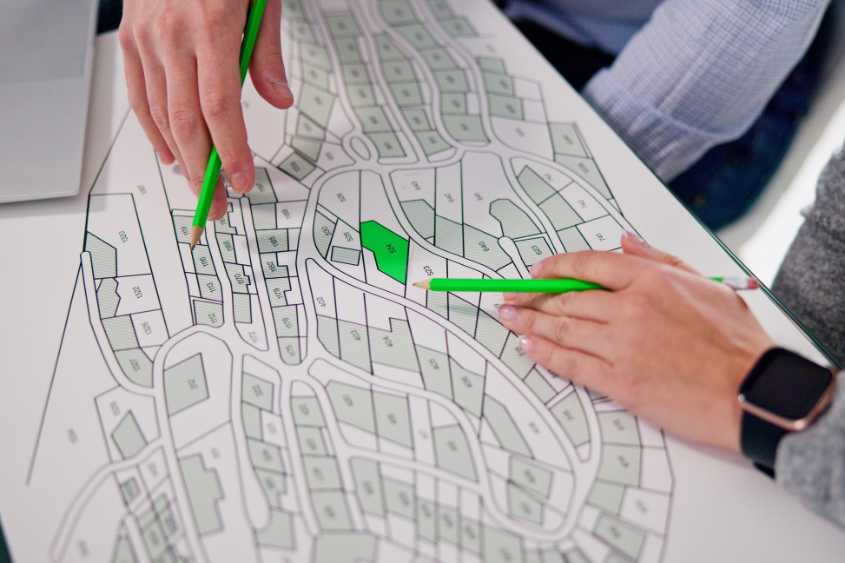
Survey plans are the body corporate’s legal documents that outline how land is divided into separate lots and common property within a community titles scheme. They define the boundaries of ownership, ensuring clarity about whether responsibility for repairs, maintenance, or improvements lies with the individual lot owner or the body corporate.
Understanding survey plans is essential for both owners and committees. By identifying exactly where lot boundaries end and common property begins, survey plans guide decisions about responsibility, costs, and the approvals required for works.
In Queensland, there are several types of survey plans used in community titles schemes, each suited to different styles of development:
- Building Format Plan (BFP): Common in multi-unit buildings such as apartments, where boundaries often run along walls, floors, and ceilings.
- Standard Format Plan (SFP): Typically used for townhouses or detached units, where boundaries are defined by surveyed land measurements.
- Volumetric Format Plan (VFP): Common in mixed-use developments, where residential, commercial, or other uses are layered within the same space.
Each plan type has unique characteristics that shape how lot boundaries and common property are managed. For owners, this means the survey plan is a vital reference point when considering renovations, repairs, or maintenance.
Why All Owners Should Understand the Survey Plan of Their Scheme
Understanding survey plans in a body corporate
common property
Common property is a core feature of living in a body corporate scheme. While each owner holds the title to their individual lot, common property covers all the areas, facilities, and infrastructure that fall outside of those private boundaries. These are the spaces and assets that everyone in the scheme collectively owns, uses, and funds.
In practice, this can mean everything from gardens, foyers, lifts, stairwells, gyms, and pools, through to carparks, driveways, and shared recreational areas. Less obvious examples include building foundations, exterior walls, roofs, plumbing and electrical systems, and even certain exclusive-use areas like courtyards or rooftop spaces. Whether visible or hidden, all common property forms part of the community’s shared responsibility.
Because it belongs to all owners, the body corporate is responsible for maintaining common property, ensuring it remains safe, functional, and fit for purpose. This involves carrying out repairs, upgrades, and replacements, with the costs covered by regular levy contributions from lot owners. Importantly, by law, the body corporate must maintain common property. It’s not optional.
Maintaining Common Property in a Body Corporate
Common property in a body corporate
FLOORING
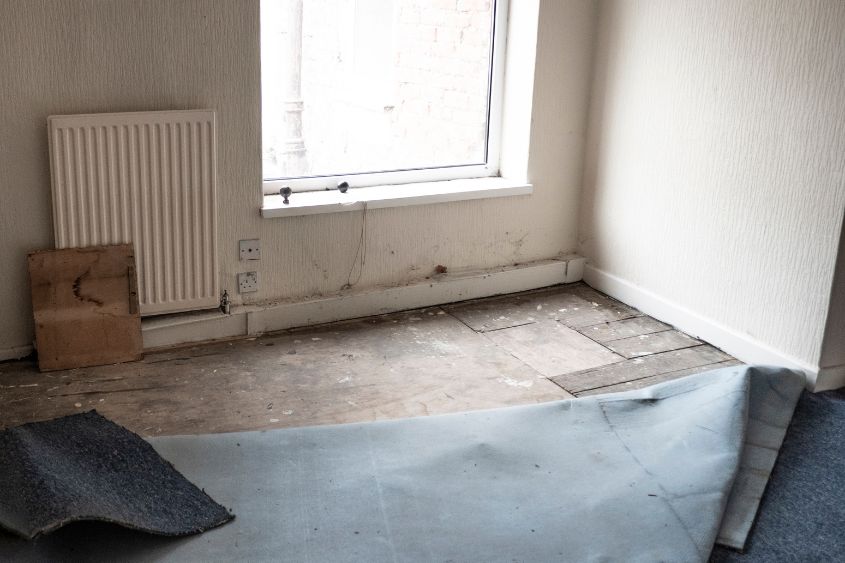
Upgrading the flooring in your townhouse or unit, such as replacing carpet with laminate, timber, or tiles, is a popular renovation choice. In a body corporate, however, these changes can have implications beyond style.
Flooring upgrades are often classed as renovations, which usually require body corporate approval, especially in apartments where noise from hard surfaces can disturb neighbours. Even if no specific flooring by-law exists, most schemes have noise by-laws, meaning excessive sound could result in orders to add insulation or reinstate carpet at your expense.
Before starting, check your by-laws and consider the impact on others. Understanding whether your works count as maintenance, repair, or renovation helps you meet body corporate requirements and avoid costly disputes, keeping both your floors and your neighbours happy.
Can I change the flooring in my townhouse or unit?
Solar
In Queensland, owners have the right to install solar panels, and bodies corporate cannot refuse applications on aesthetic grounds. Approval is still required however, and conditions may be imposed covering installation standards, maintenance responsibilities, and what happens if panels need to be removed for roof repairs.
In apartment buildings, the roof is common property owned by the body corporate. Because space is limited, individual systems are uncommon and the body corporate may choose to install a shared system that reduces electricity costs for common facilities such as lifts, pools and lighting. This, in turn, may lower levies for all owners.
For townhouses, duplexes or strata houses, the approval pathway depends on the survey plan. In most schemes the roof is common property, meaning solar installations usually need approval at a general meeting if they cost over $3,000.
In a smaller number of schemes where the roof is owned by the lot owner, approval is still needed but decisions are made at committee level and again cannot be unreasonably refused.
Owner Responsibilities When Installing Solar Panels in a Body Corporate
Solar panel approvals in a body corporate
Installing Solar
by-laws
By-laws are the rules that govern how people live in and use a body corporate scheme. They cover everyday matters such as the use of common property, noise, parking, pets, renovations, and behaviour of residents and visitors.
By-laws are designed to promote harmony, protect property, and ensure fair use of shared spaces. Every owner, resident and visitor must comply with the by-laws, and the body corporate committee is responsible for enforcing them.
Notifying the Body Corporate AFTER Renovations are Complete
Body corporate by-laws
maintenance
Maintenance is ongoing or preventative work that keeps the property in good condition and prevents deterioration. While the body corporate is generally responsible for the upkeep of buildings, common areas, and shared facilities, lot owners are responsible for maintaining their individual lots.
These responsibilities are not optional. Under the Body Corporate and Community Management Act 1997, both the body corporate and lot owners are legally required to maintain their respective areas.
The body corporate must ensure common property and shared facilities are safe, functional, and well-maintained, while lot owners must keep their lots, including gardens, internal fixtures, and pest control, in good condition.
repairs
Repairs are the most straightforward type of work. They involve restoring something that is broken, damaged, or no longer functioning as it should. Unlike renovations – which change or improve, or maintenance – which is preventative, repairs are reactive works that return an item to its original working condition.
Examples of repairs include:
- Replacing a broken roof tile.
- Repairing a faulty lift.
- Fixing damaged gutters.
Who is responsible?
Responsibility for repairs depends on where the issue occurs. If the damage is within an individual lot, the lot owner is generally responsible. If the damage is on common property, the body corporate must arrange and pay for the repairs.
Clear understanding of lot boundaries, as shown on the scheme’s survey plan, is essential for determining this responsibility.
resources
LEGISLATION links

Maintenance Responsibilities by Format Plan
Queensland Government

Maintenance in a Body Corporate
Queensland Government
QBCC
Queensland Building and Construction Commission

Queensland Government
Neighbourhood Disputes (Fences & Trees)